
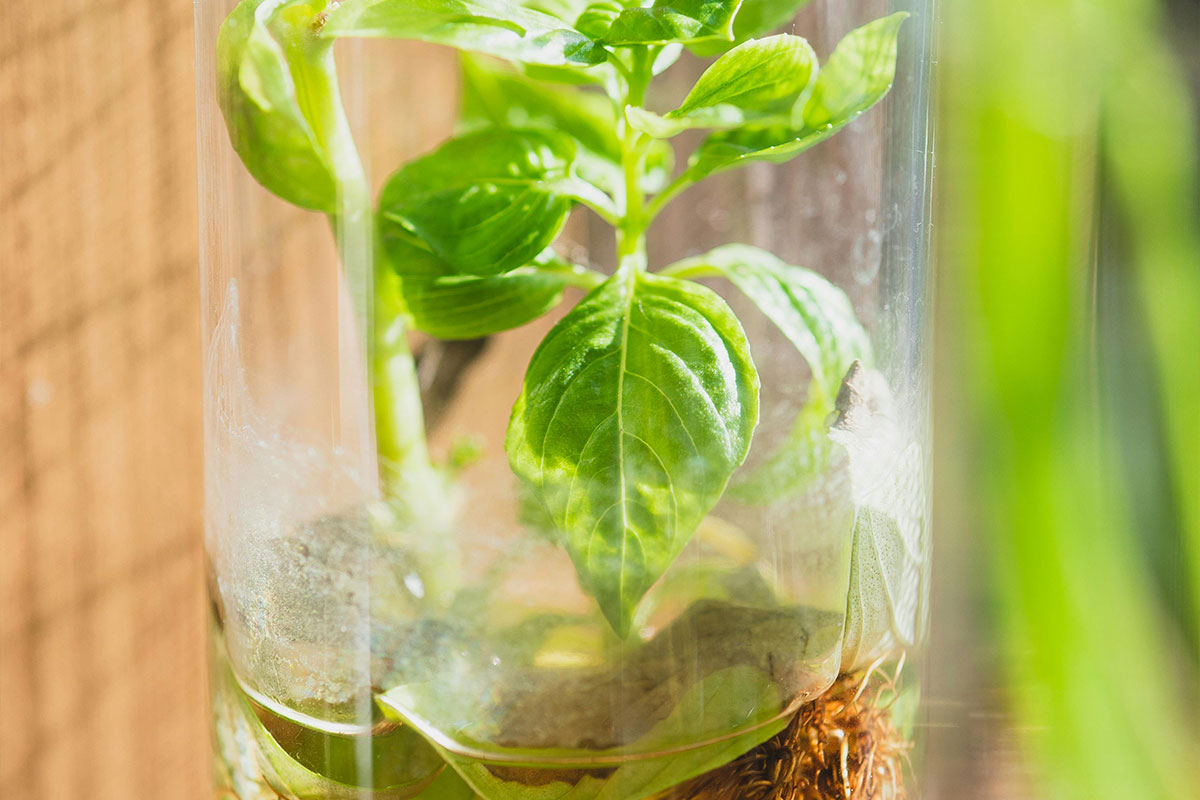
When I was in 2nd grade in elementary school, I remember an activity that left me fascinated. The teacher asked us to bring a Gerber jar (empty baby food jar), which was a small size, cotton, and 3 beans. The purpose of the activity was for us to see how bean seeds germinated under the right conditions.
Once we brought our items, the teacher told us to put the cotton inside the jar. It wasn’t about putting too much in, neither a super small piece. It was about putting enough so that it reached about halfway, and that it was not too tight. Then they told us to put the beans in the middle of the cotton, trying to keep them a little apart. The next step was to add a few drops of water. Once the entire group had their jars ready, it was time to put them by the classroom window. Since each jar had each person’s name, we already knew which one was ours.
The first days, when we entered the classroom, some of us went straight to look for our jar, to see if the bean had already germinated, only to be disappointed by the “lack of results.” We were small, and impatient.
As few days passed, some of the beans that could be seen in the middle of the cotton looked plumper, and others “like they were starting to stick out their tongues,” at least that was what we said. There were other jars that had the bean completely covered by cotton, so you couldn’t see if the bean was sticking out its tongue or not. Later we understood that it was not that the bean was sticking out its tongue, but that it was beginning to germinate. But in those jars where the beans couldn’t be seen well, we couldn’t know what was happening.
As more days passed, some of the jars began to clearly show the stem of the sprout, and the owner of the jar, in addition to being proud, showed it off to those who were nearby.
After approximately two weeks, and being consistent with the teacher’s instructions in keeping the cotton wet, it was time for everyone to take their jar, and for us to receive the conclusion of that lesson.
For the seed to germinate, it must have certain ideal conditions: enough soil (which in our case was cotton); enough water; and light.
With everyone having their own jar, it was impossible not to compare what we found. Some jars, even after the approximately two weeks that the activity lasted, were barely germinating. Others had their stem that began to appear in the middle of the cotton. And others had long, slightly thick stems that came out not only from the cotton, but from the jar.
The question for all of us whose beans didn’t germinate so quickly was why?
For those whose beans did not germinate, it was impossible not to compare the stems, and think that they had done something wrong. The teacher was very clear, that it wasn’t that they had necessarily done anything wrong. She explained that even if the beans were all the same, they did not necessarily have to germinate the same.
If all the beans germinated, I honestly don’t remember. But I was fascinated by the mystery that some did germinate, and others barely opened.
In your life, do you feel that you have borne fruit? Do you compare those fruits with someone else’s?
I have heard from people who can see the fruits of their efforts, as well as others who at that moment have felt that they have “not been lucky” because they did not have fruits to show and share with others.
What is your experience?
In that school activity, all the beans were put to germinate at the same time, in similar conditions, and together. But in our lives, it is completely different. Each of us has a different time, place and environment, and it would be unfair to want to compare our fruits when we do not have the same roots.
There are mature trees that seem like they will no longer bear fruit, and they bear fruit again. There are young plants that need time to bear fruit. And there are other plants that will bear fruit in better conditions.
The teacher told us that adequate soil, water and light were necessary for the beans to germinate. What is your equivalent of these elements, so that you bear fruit at the right time?
Or put in another way, what do you need to grow?
When we have had the opportunity to review and change what we know we can change, and still see no fruit, perhaps what is necessary is just trust and time.
And let’s remember, that growth also takes place in the dark. The seed opens inside the earth, and a pregnancy, inside the mother’s womb. It was in the darkness that Jesus mentioned that a man sowed the seed, only to find that it had germinated.
If the Spirit leads you, you can ask yourself along with Jesus the carpenter, what do I need to grow?
Marisol
P.S. We can hear about growth in the readings for the 11th Sunday in Ordinary Time, year/cycle B.