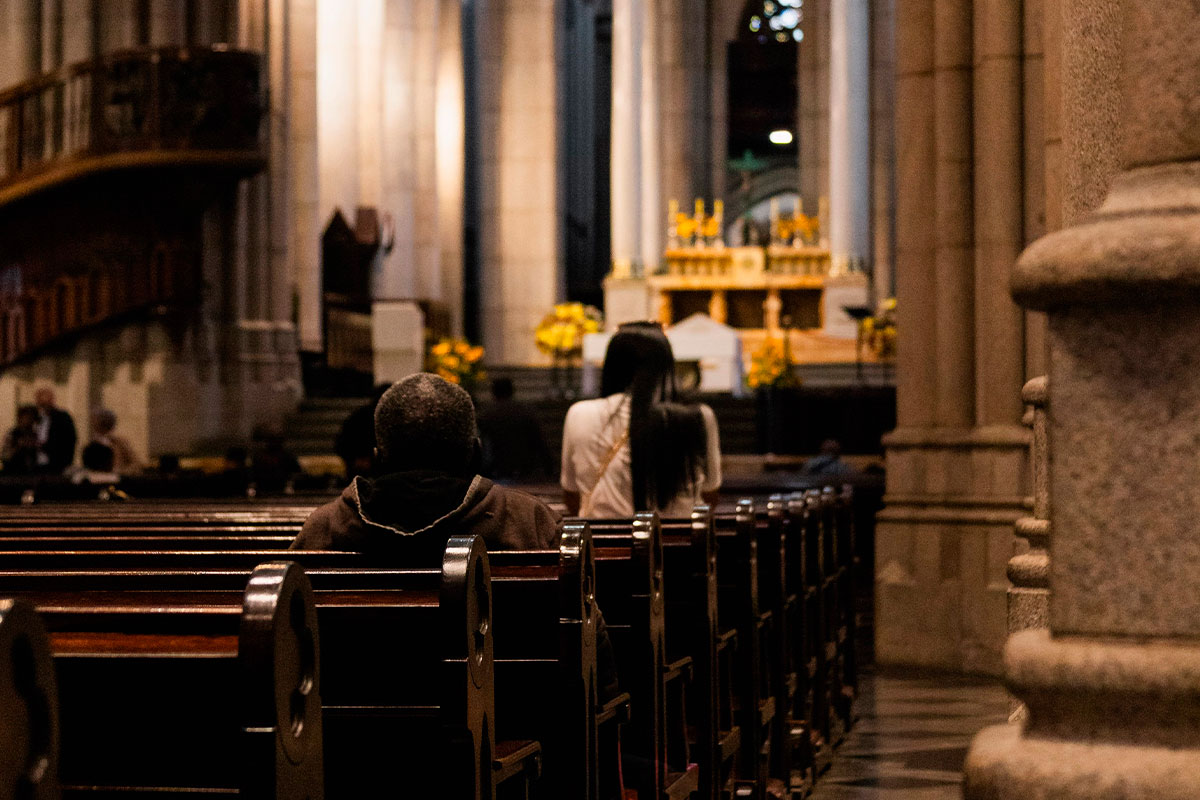

Some time ago, I was part of a class where some time was dedicated for anyone who wished to express what they had understood.
The class covered various angles of different biblical passages. Some were well-known, others not so much. They also covered passages that were confusing to many of us, especially in the Gospel.
The class was held weekly, and not everyone always attended. Some days the group was full, and on other days, between half and two-thirds of the attendees were present.
For those who were able to attend more regularly, it was clear that each class made it easier for them to express what they understood, as well as any questions they had.
In one particular class, as the course was close its end, we covered a not so popular biblical passage. In this passage, Jesus tells the parable of a man looking for figs in his vineyard, not finding any for three years. The story continues with the vinedresser telling the man not to cut down the fig tree, that it would remove the soil around it.
As the participants had grown more comfortable with each other, it wasn’t difficult to hear the variety of comments this passage evoked. In short, it caused a stir. There was a wide variety of comments:
“Why is Jesus so cruel here?”
“What’s the fig tree’s fault if it doesn’t bear fruit yet?”
“Yes, remove the fig tree, it’s just taking up space!”
“Will Jesus send me to hell if I don’t bear fruit?”
“Where is the hope Jesus would have in the fig tree?”
And one participant was so moved, that while sobbing she asked:
“So this is what Jesus will do with me? I’ve been told many times that I should already be bearing fruit. I know God has given me so much, but I don’t know if what I give is enough or not…”
And you, have you heard this passage before? What comes up for you?
In class, it later emerged that there was a feeling of fear of inadequacy.
In his wisdom, one of the leaders reminded us:
“The gospel is good news. If there is a passage that doesn’t lead us in one way or another to love, it’s probably not for us at this point in time. Or perhaps we’re not understanding it well.”
The leader invited us to pay attention to the fact that the removed soil around the fig tree represents a change, and that this would surely help the fig tree bear fruit.
In your life, is there anything you would like to bear fruit in?
Could it be that God is inviting you to change your thinking, feeling, or behavior, to remove the soil of your daily life?
In class, someone asked:
“Why do some fig trees bear abundant fruit, and others don’t?”
To which the leader replied:
“I can’t tell you exactly, but it’s important to remember that it’s not fair to compare the fruits without comparing the roots.” If the vinedresser removes the soil, the roots will surely be able to receive better water, and consequently, perhaps bear better fruit.
In the Gospel account, Jesus doesn’t mention whether the fig tree bore fruit the following year or not. Could Jesus be implying that there is always time for change?
If the Spirit leads you, ask Jesus the carpenter what He is inviting you to change in your life, so that you might bear fruit. And perhaps, you will share abundant, sweet, and juicy fruit in a new season.
Marisol
P.S. We can hear about the fruit that can emerge after profound change in the readings for the Third Sunday of Lent, Year/Cycle C.