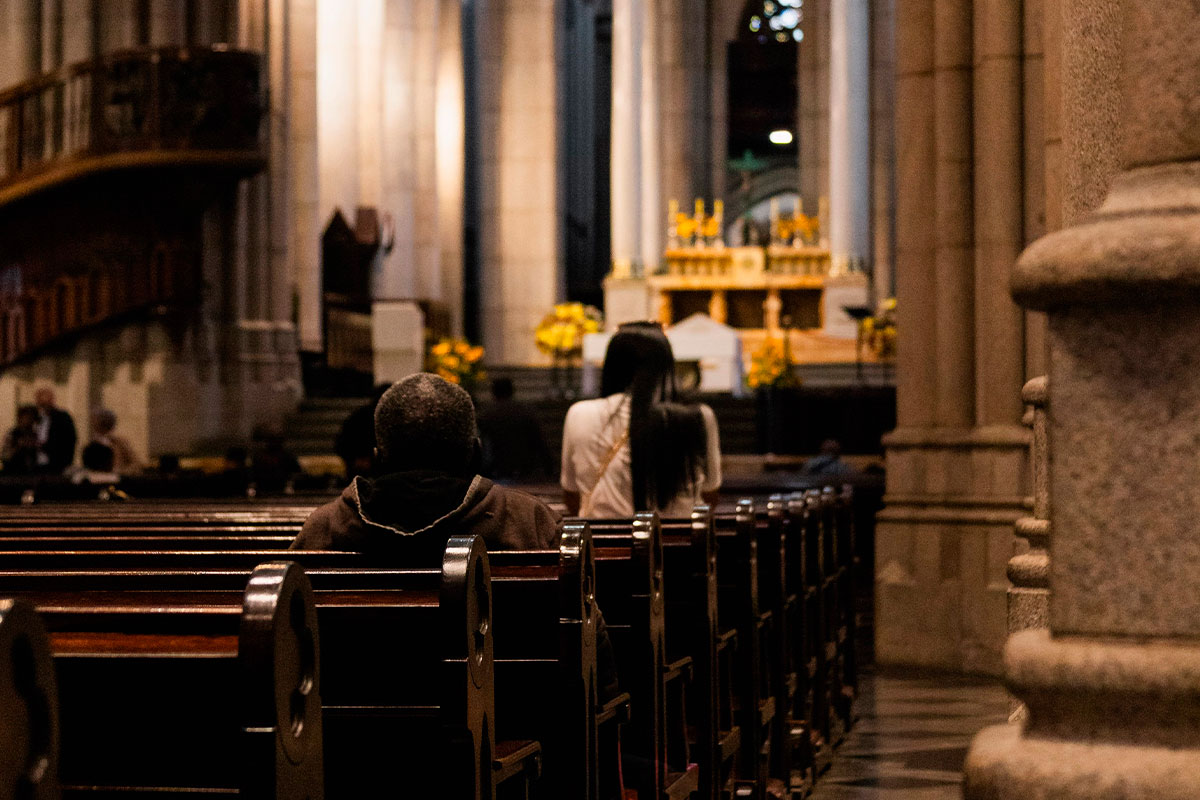

When I decided to pursue graduate studies, I had only a very vague idea of what it would entail. Based on my interests at the time, I had already chosen a concentration in pastoral leadership.
Each semester, we were required to meet with our academic advisor at least twice. These meetings helped ensure we stayed on the right academic track by selecting the necessary courses from those offered each term.
After completing a few semesters, it was time for me to take some elective courses. I looked for classes offered on the days I was already commuting to campus, aiming to limit my visits to just once a week.
It so happened that a new professor was teaching spirituality courses that semester, and the schedule aligned perfectly for me to attend his first class.
Wow.
I already had a wealth of experience in pastoral activities prior to enrolling in this Master’s program in Pastoral Theology, but this was something I had never imagined. It didn’t just interest or fascinate me; it truly captivated me. Everything I learned began to quench a thirst I hadn’t even realized I had. It was a deep thirst, and the water was refreshing.
As the semesters went by, I continued to sign up for every class I could with this professor. Each class was not only a delight for my curious mind but also a balm for my heart and soul.
In every class, I soaked up information like a dry sponge, trying to absorb everything my mind would allow.
During one of these classes—as part of a broader topic—the professor began to speak about silent prayer, or contemplative prayer.
I was struck by the stark contrast between contemplative prayer and other forms of prayer. I was familiar with the Mass, repetitive prayers, novenas, the Rosary, and following guided prayer formats. Contemplative prayer, however, required none of that. Learning about the description of contemplative prayer—simply being in silence “without doing anything”—was very confusing for me.
“Do I really not have to do anything?”
That was the question I kept asking myself over and over.
And you—how do you experience your prayer life? Do you feel you have to “do” something or “fulfill” some requirement?
The professor invited us to incorporate one of the many contemplative prayer techniques into our personal lives. So, I did.
What I struggled with most was the deeply ingrained idea that I had to “do” or “accomplish” something during prayer.
In Scripture, the Letter to the Romans tells us that the Spirit intercedes for us. And that is precisely what happens in contemplative prayer. You and I—each of us—do not need to “do” anything. God knows what we need, even if we aren’t entirely clear on it ourselves. And God is a God who provides, full of love to give to you and to me. It is in contemplative prayer that we become immersed in what God knows we need: His love.
Would you like to let yourself be loved?
If the Spirit leads you, share with Jesus the Carpenter whether you are willing to let yourself be loved “without doing anything.” You might just discover that contemplative prayer is a way to let yourself be loved.
Marisol
P.S. We hear about the Spirit interceding for each of us in the readings for the 16th Sunday in Ordinary Time, year / cycle A.
P.S. 2: If you would like to learn how to let yourself be loved, you can sign up for the Christian Spirituality program in Spanish being offered in the fall of 2026 at the Center for Religion and Spirituality at Loyola Marymount University.